This reflection examines how careful observation can move design beyond assumptions and toward solutions grounded in real experience.
Design is strongest when it begins with real people rather than imagined solutions. Kelley and Kelley (2013) present creativity as something that grows through empathy, experimentation, and the confidence to act on ideas. Moggridge (2007) reinforces this perspective by showing that effective interaction design depends on understanding how people actually behave in real situations. Together, these readings suggest that meaningful design is not created by guessing what people need or by starting with technology first. Instead, it begins with observation, empathy, and a willingness to understand the everyday experiences that shape how people use tools, solve problems, and move through their lives.
Kelley and Kelley (2013) present creativity as something that can be strengthened through practice, rather than as a talent that only some people possess. Their discussion of creative confidence shows that progress often comes from trying ideas, learning through mistakes, and using feedback to improve. Kelley’s TED talk extends this idea through Bandura’s concept of guided mastery, where small steps help people “turn fear into familiarity.” This connects to human-centered thinking because understanding a problem requires more than assuming what people need; it requires observation, questions, and attention to what people reveal through their behavior. Moggridge (2007) builds on this idea by focusing on the way people interact with products, services, and systems in everyday settings. What seems simple or logical in theory may not work well when it meets real habits, expectations, or environments. Together, the readings and TED talk show that useful solutions are shaped through curiosity, reflection, and a closer understanding of real human experience.
Kelley (2012) provides a clear, real-world example of these ideas through the story of Doug Dietz, who helped design medical imaging equipment and later realized that children were often frightened by the MRI experience. Instead of viewing the machine only as a technical product, Dietz paid attention to how children and families experienced the process in real life. That observation led him to rethink the entire experience through empathy, storytelling, and iteration. This connects back to the readings because it shows that strong solutions do not usually begin as perfect ideas. They develop when people pay attention, question assumptions, gather feedback, and revise the experience around the people it is meant to support.
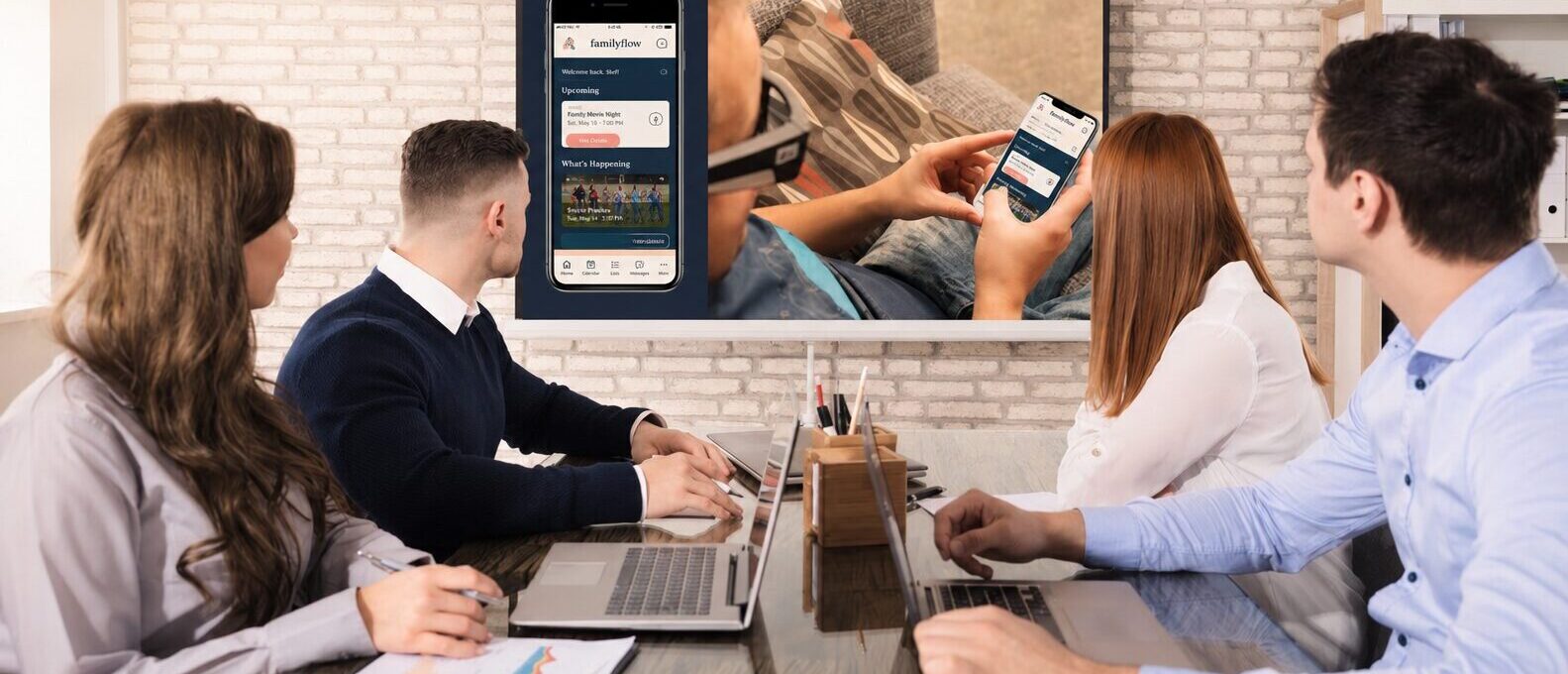
That same focus on real experience connects to the early development of FamilyFlow. Rather than starting with a preset list of features, I am starting with an everyday problem: how co-parents keep track of child-related information when life is moving quickly. The need I keep coming back to is simple: important details rarely stay in one place. They may be spread across messages, emails, calendars, photos, school updates, and documents, making it difficult to find what matters when needed. The goal is to bring those scattered pieces into a clearer system while still fitting the tools and routines families already use. A successful version of FamilyFlow should feel less like another tool to manage and more like a clear system for keeping important information organized and accessible as life moves.
“Being human-centered is at the core of our innovation process.” ~ Kelley and Kelley

References:
Kelley, D. (2012, May). How to build your creative confidence [Video]. TED Conferences.
Kelley, T., & Kelley, D. (2013). Creative confidence: Unleashing the creative potential within us all. Currency.
Moggridge, B. (2007). Designing interactions. MIT Press. (Chapter 10, “People,” pp. 641–681)