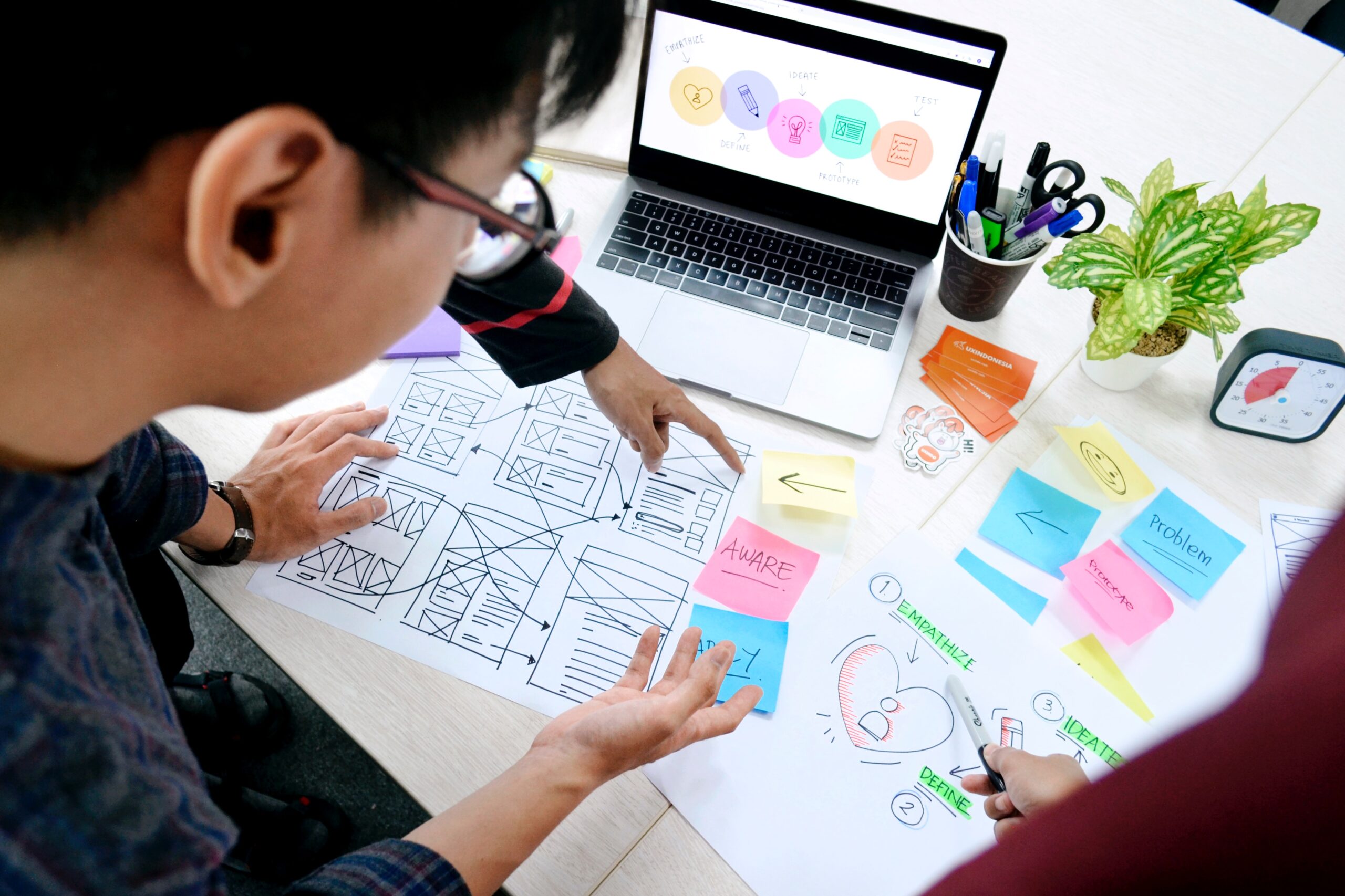
“Storytelling bridges analysis and synthesis.” ~Parrish
This article explores how design becomes transformative when it shifts from structure to storytelling.
Instructional design is often described in structural terms. We speak of modules, hyperlinks, navigation systems, and learning objectives as though organizing content is the same as shaping learning. Yet learners do not experience “modules” or “pages,” they experience moments of confusion, curiosity, and discovery. This week’s readings move the conversation beyond structure and toward a more human-centered view of empathy, perspective, and lived experience. Together, the readings suggest that meaningful design begins not with the visible constructs of a medium, but with the human experience unfolding within it.
This shift becomes concrete in Creative Confidence through the story of the Embrace baby warmer. What began as an attempt to engineer a low-cost incubator changed once designers immersed themselves in the lived realities of rural mothers. By observing the actual conditions in which the product would be used, the team reframed the problem around accessibility and portability rather than technological complexity. By centering the user’s lived reality, designers transform not only what they build but how they understand the problem itself. Parrish (2006) reinforces this point by describing storytelling as a bridge between analysis and synthesis, enabling designers to anticipate learner experiences that data alone cannot reveal. Together, these readings suggest that effective design extends beyond organizing information and toward shaping human experience.
As I continue developing Coastal Motion, I see how easily the project can be described structurally, as a sequence of investigations, digital tools, and place-based activities. Those components are necessary, yet they do not fully capture the experience I hope learners will have. If I focus only on structure, I risk designing a system rather than an encounter with place. The readings challenge me to imagine the learner standing at the shoreline, noticing where the water slows, feeling uncertainty, and gradually constructing understanding. In this sense, Coastal Motion becomes less about delivering coastal science content and more about shaping a lived learning experience.
Understanding the difference between structure and experience has reframed my view of instructional design. The Embrace story demonstrates that meaningful solutions emerge when designers engage directly with the realities of those they serve. In developing Coastal Motion, this insight shifts my attention from platform architecture to learner perspective. Storytelling becomes a method of imagining experience before it exists, revealing moments of hesitation, insight, and transformation. Design is not merely the arrangement of elements, but the shaping of experience as it unfolds across time and place.

References:
Gibbons, A. S. (2003). What and how do designers design? TechTrends, 47(5), 22–25.
Kelley, T., & Kelley, D. (2013). Creative confidence: Unleashing the creative potential within us all. Currency.
Parrish, P. (2006). Design as storytelling. TechTrends, 50(4), 72–82.