Overview
Science education increasingly asks students to engage with complex systems, human influence, and large-scale change. For many middle school learners, these ideas can feel removed from the places they move through each day, positioning them as observers rather than participants. Although students are capable of engaging with complexity, global challenges are often presented in ways that seem abstract or distant. Bridging the space between understanding and lived experience presents a meaningful opportunity for innovation in learning design.
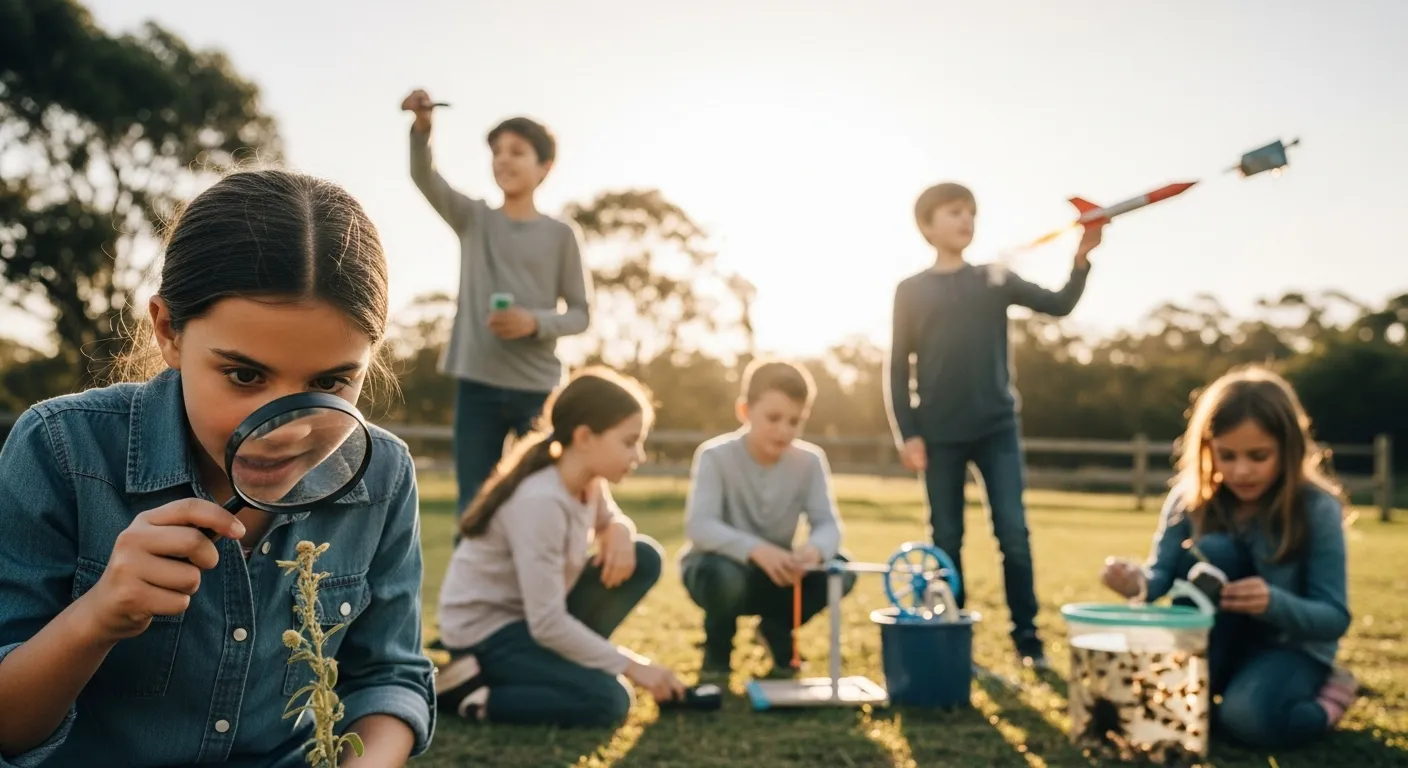
Coastal Motion was developed in response to this educational challenge. Drawing from principles of local, place-based learning and learner-centered design, the project emphasizes that deeper understanding emerges through interaction with real environments alongside instruction. Instead of beginning with abstract concepts, Coastal Motion encourages students to explore nearby coastal areas through guided movement, observation, and reflection. These encounters help learners notice how physical and human systems intersect in spaces they already know, positioning learning as grounded in lived context. By foregrounding action, the project aims to support both environmental understanding and learner confidence.
Audience & Learning Context
This toolkit is intended primarily for middle school students in coastal communities who regularly encounter beaches, waterways, and shoreline landscapes in their daily lives. At this developmental stage, learners are beginning to engage with more complex environmental relationships, yet they often lack opportunities to connect scientific concepts to familiar places. Coastal Motion responds by reframing local surroundings as sites of investigation, encouraging students to examine the systems already present in their own communities rather than relying solely on distant or abstract examples.
Educators represent a secondary audience, particularly teachers seeking meaningful ways to integrate local environments into science instruction. Practical constraints, limited time, curricular demands, and logistical challenges, often make outdoor learning difficult to sustain. Coastal Motion offers a modular structure that can fit within existing instructional frameworks while still allowing room for curiosity and exploration. Its adaptable design supports implementation across varied classroom and community contexts without requiring extensive resources or rigid sequencing.
What It Does & How It Works
Coastal Motion is a modular set of learning activities that encourages students to investigate coastal systems by physically moving through and interacting with their environment. Rather than following a fixed sequence, the toolkit is composed of activity cards that can be mixed, matched, and adapted depending on the location, learning objectives, and group needs. This allows educators to tailor the experience to their students and context while maintaining a consistent focus on observation and inquiry.
Each activity connects a type of movement, such as walking, positioning, or mapping with a specific coastal process, including tides, wind patterns, runoff, erosion, or landscape changes over time. Students are prompted to observe, document their findings, and reflect on what they notice, using motion as a way to focus attention on environmental patterns. The toolkit is designed as a flexible and evolving resource: educators can select one or more activities to suit their goals and adapt or extend them over time, with an emphasis on learning that emerges through interaction with local environments.
Intended Outcomes and Educational Value
The primary goal of Coastal Motion is to help young learners see themselves as capable of interpreting and engaging with the ecological systems around them. By shifting the focus from passive reception of facts to active exploration and reflection, the toolkit creates a pathway for students to form meaningful connections with environmental science. Learning becomes rooted in lived encounters rather than distant abstraction, helping students recognize that scientific understanding can emerge from careful attention to the places they already know.
For educators, the resource offers a practical model for bringing locally grounded, inquiry-driven learning into classrooms or community settings without requiring extensive resources or rigid planning. Its modular design makes it easy to adjust to different schedules, settings, and curricula while centering student curiosity and exploration. More broadly, Coastal Motion contributes to ongoing conversations in learning design by demonstrating how action-based, context-driven tools can support both scientific understanding and a stronger sense of ownership in the learning process.
“We have to accept human behavior the way it is, not the way we would wish it to be.” ~ Norman