The Place Where It Slows
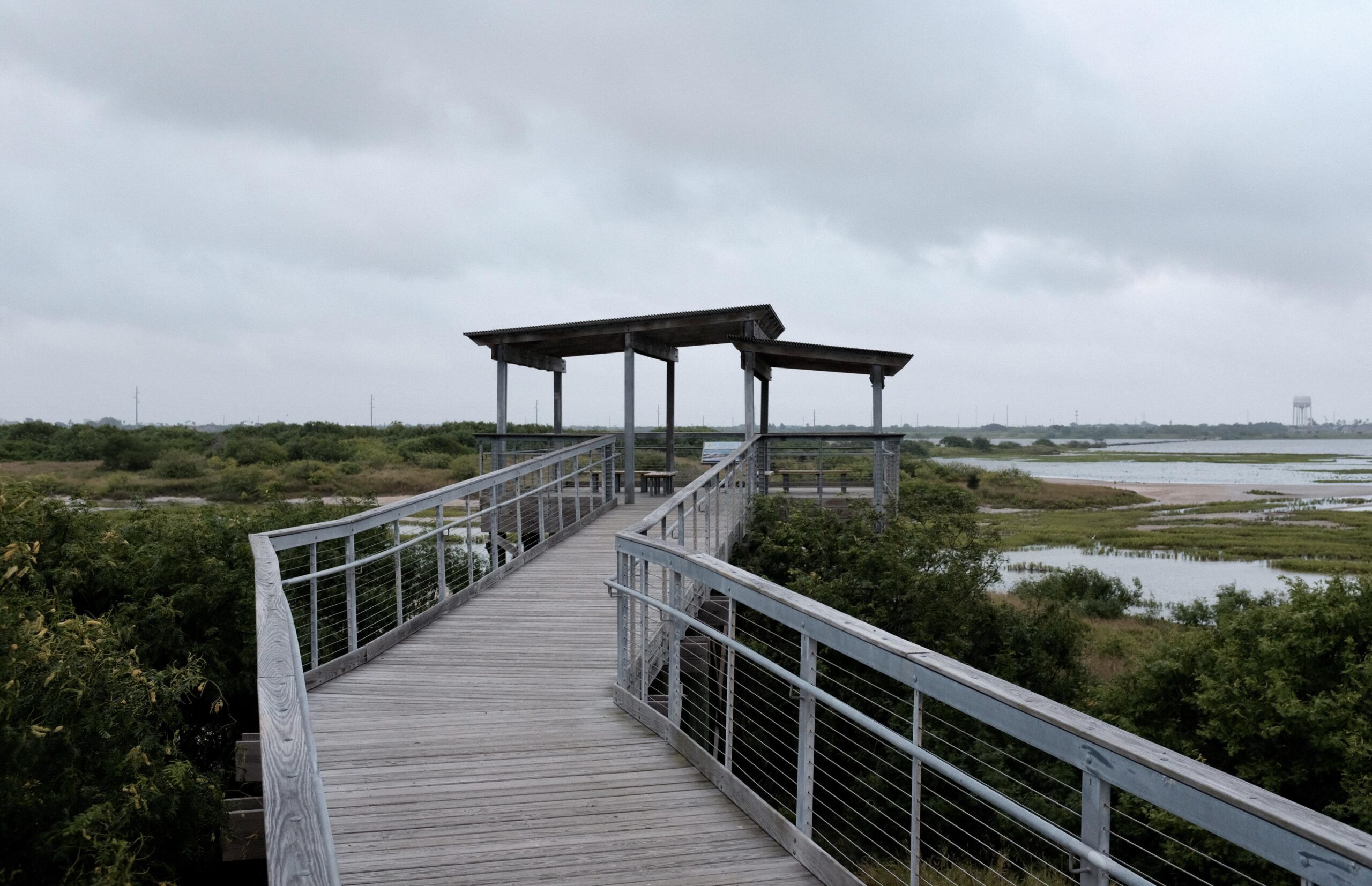
The wooden boardwalk creaks under Dylan’s sneakers as she steps out over the marsh at Oso Bay Wetlands Preserve. The air feels thick and a little sticky from last night’s rain. Water is still sitting in shallow puddles between the tall grass, and when a heron suddenly flaps up from the reeds, she jumps a little. Everything looks shiny, like the storm just left.
The storm had rolled through North Padre Island late the night before. She remembers hearing the wind push against her bedroom window. Now the sky is lighter, but the ground still holds the rain. The boards feel slightly slick beneath her shoes, and she walks more carefully than usual.
Dylan sometimes goes fishing with her grandpa in Oso Bay, and she hates when their plans get canceled because of “water quality warnings.” She doesn’t fully understand what that means yet, but she wants to. If rain washes through the streets and ends up in the bay, she figures there has to be a reason the water sometimes isn’t safe.
Earlier, near the parking lot, she had watched rainwater rush along the curb. It dragged sand, leaves, and a smashed Whataburger cup lid toward the storm drain. The stream moved fast, almost in a straight line, like it knew exactly where it was going.
“Look how fast that’s going!” David had called out, pointing as the water disappeared into the metal grate.
Dylan notices that in the marsh, the water doesn’t rush like it did near the curb. Instead, it spreads. It pools in low spots and sinks slowly into the ground. When the wind passes through the grass, she watches the surface ripple, but the puddles stay where they are.
Coastal Motion had asked her group to focus on movement.
Where does water hurry?
Where does it slow down?
She pulls out her iPhone and opens the Coastal Motion web app. The activity screen prompts her to capture what she notices before it changes. She taps the voice note button and lowers the phone closer to the ground.
“Near the parking lot, it moved fast and straight into the storm drain,” she says quietly. “Out here, it just spreads. It sinks in.”
She snaps a photo of the puddles sitting between the reeds. Then she zooms in on the soft mud at the edge of the boardwalk.
She crouches down and pokes the ground with a stick. It’s soft and squishy. When she presses harder, water fills the tiny hole she makes. She steps off the boardwalk for just a second and feels her sneaker sink deeper than she expects.
“It’s like quicksand,” someone jokes.
“No, it’s like a sponge,” another student says.
Sponge feels more right.
She types a quick note:
Pavement = fast, straight, loud.
Marsh = slow, spread out, quiet.
But then she pauses. If the marsh soaks up water like this, why does Oso Bay sometimes still have water quality warnings?
She scrolls back through the activity instructions, as the answer might already be there. It isn’t.
She looks up at the bay in the distance. It appears calm and flat under the gray sky. The water here slows. It spreads. It sinks.
But maybe not everything does.
She presses record again.
“Where does the rest of it go?”