“The first step toward being creative is often simply to go beyond being a passive observer and to translate thoughts into deeds.”
~ Kelley & Kelley
This article explores how action-oriented design can support creative confidence and meaningful engagement in place-based learning environments.
Environmental and science education often emphasizes awareness, understanding systems, recognizing patterns, and identifying human impact. While this knowledge is essential, it can also position learners primarily as observers. The readings for this module pushed me to think more carefully about what happens after awareness, and how learning environments might support learners in moving from noticing the world to acting within it.
In Creative Confidence, Kelley and Kelley describe creativity as a belief in one’s ability to make a difference through action. Creative confidence is not about having the right answer or feeling fully prepared, but about being willing to begin, experiment, and learn through doing. Rather than waiting for certainty, confidence develops through small acts that allow learners to test ideas, reflect on outcomes, and adjust their thinking.
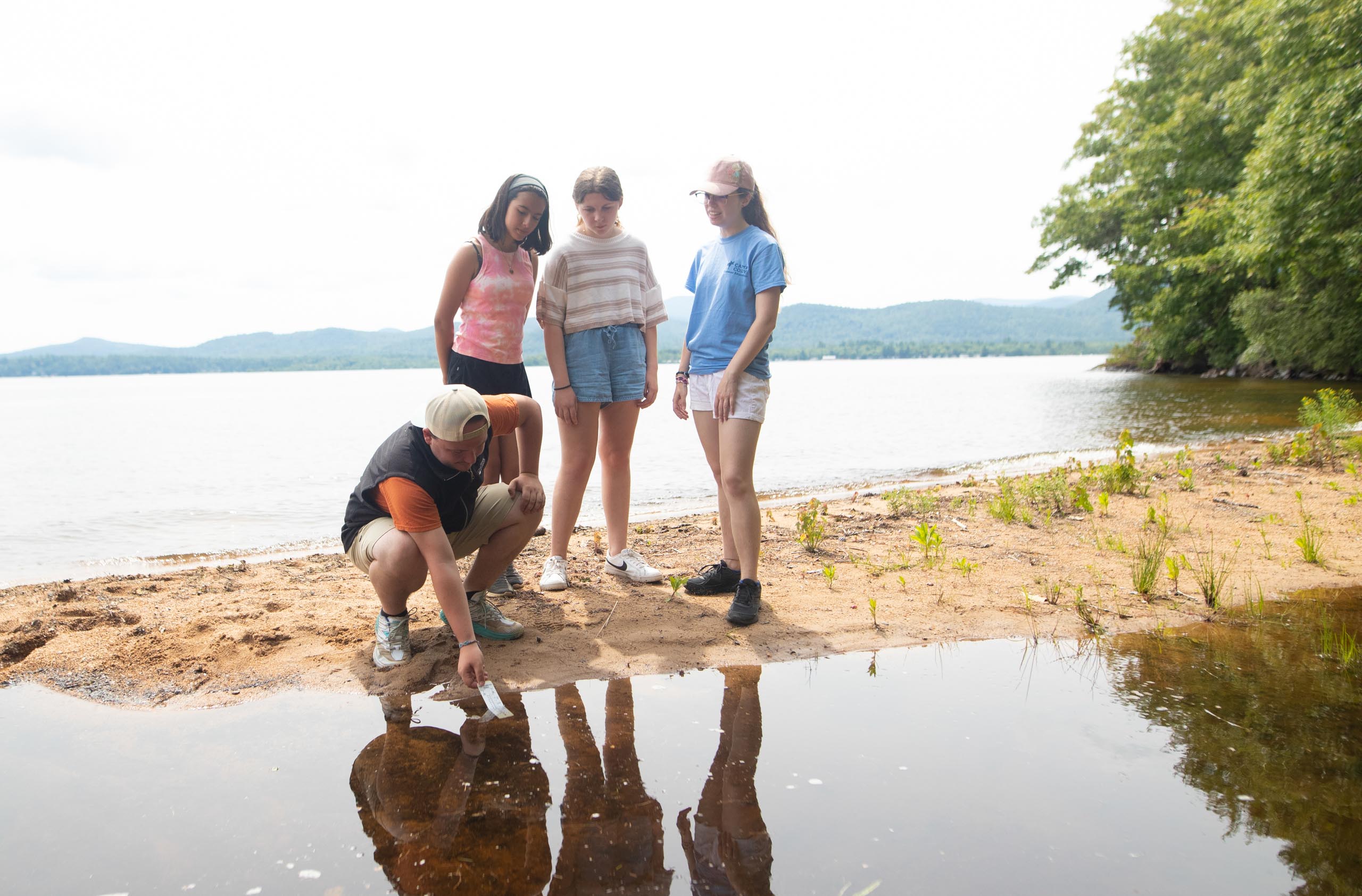
This perspective strongly informs the design of Coastal Motion. Many middle school students in coastal communities regularly encounter shorelines, bays, dunes, and waterways, yet these places often blend into the background of everyday life. Coastal Motion responds by using movement as a starting point for learning, asking learners to walk shorelines or reposition themselves in space so that familiar environments are experienced differently. Through this shift in perspective, attention is drawn to observable changes such as tides, wind-driven movement, runoff pathways, and shoreline erosion.
For middle school learners, translating thoughts into deeds begins with recognizing how everyday actions are connected to these visible changes. By tracing runoff, observing erosion, and noticing how built spaces intersect with natural systems, students begin to understand human impact as something local and experiential rather than abstract. This approach aligns with Norman’s emphasis on human-centered design, which prioritizes real human experience over assumed behavior. Learning emerges through direct encounter and reflection, supporting both understanding and confidence through experience.

References:
Kelley, T., & Kelley, D. (2013). Creative confidence: Unleashing the creative potential within us all. Currency.
Norman, D. A. (2013). The design of everyday things: Revised and expanded edition. Basic Books.